00:00 Introduction to Digital Literacy and Individual Needs
01:34 Understanding Individualized Digital Needs
05:54 Navigating Technology: A Personalized Approach
07:55 The Complexity of Digital Wellness Policies
Not all kids have the same relationship with technology—and blanket screen time rules are failing neurodivergent children.
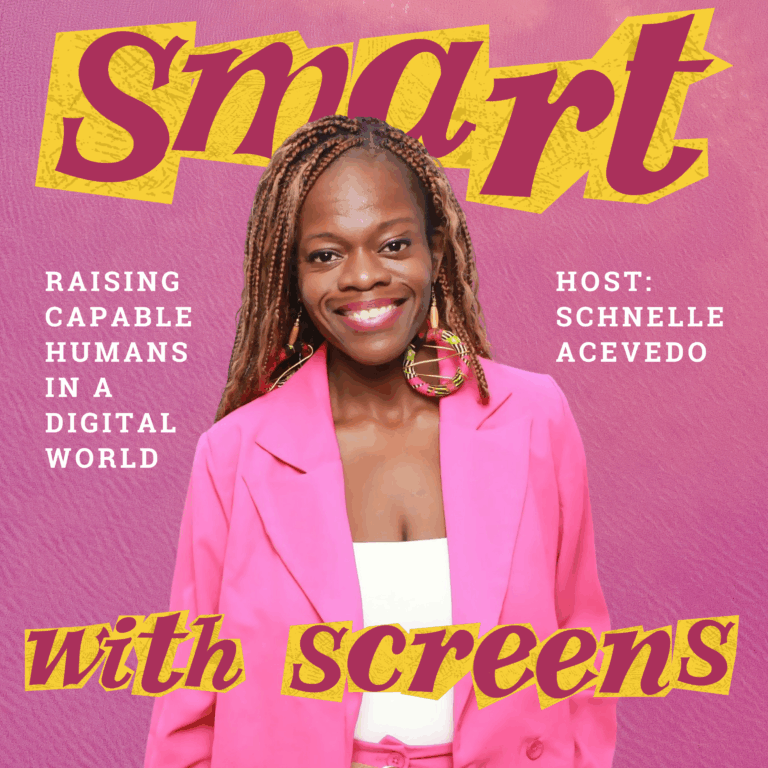
Digital literacy educator Schnelle Acevedo explores why individualized approaches matter for kids with ADHD, autism, anxiety, and other neurodivergent traits.
Topics covered:
Self-Regulation & Screen Time
- Why some kids naturally limit device use while others struggle
- How ADHD affects dopamine regulation and makes algorithms more addictive
- Why “just put the phone down” doesn’t work for all kids
When Algorithms Actually Help
- How neurodivergent kids use technology as assistive tools
- YouTube tutorials for kids with executive function challenges
- Discord and gaming communities for autistic kids
- AI apps designed specifically for neurodivergent children
- Apps for anxiety and emotional regulation
What Individualized Approaches Look Like
- Questions parents should ask instead of universal time limits
- How schools can differentiate digital support (like IEPs)
- Recognizing when apps are tools for functioning, not just entertainment
Inspired by meeting an entrepreneur developing AI for neurodivergent kids, Schnelle challenges blanket phone bans and screen time rules. Instead: What does this specific child need to thrive with technology?
Perfect for: ✓ Parents of neurodivergent children ✓ Special education teachers ✓ School administrators creating inclusive policies ✓ Anyone interested in disability justice and digital equity
Related topics: ADHD and screen time, autism and technology, assistive technology, inclusive digital policies, executive function support, digital wellbeing for neurodivergent students
Hey, welcome to Smart with Screens. I’m Schnelle Acevedo. I am a current mom blogger and digital literacy educator here in Brooklyn. I spent 14 years creating campaigns that were designed to keep you scrolling and clicking for companies like Disney, Netflix, and Amazon.
Now I’m pulling back the curtain on how it all works. So parents, educators, and young people can navigate the digital world with their eyes wide open. Whether you’re trying to understand algorithms, manage screen time, or just trying to figure out what’s actually happening behind the screens, you’re in the right place. I’m Schnelle and let’s get smart with screens.
So last week I was sitting in an entrepreneurial class through the Department of Education. And yes, I’m always learning even while I’m teaching. And I met someone who’s developing an AI app specifically for neurodivergent kids.
And as they described it, how it could help with emotional regulation, with routine management, with communication. I felt two things at the same time.
Number one, that this is incredible. I have a neurodivergent child, so I understand. And this is technology being used as a genuine tool for support and inclusion. And the second thing I thought was that this completely complicates everything I’ve been saying about screen time and algorithms and digital wellness. Because if we’re having a blanket conversation about kids and screens without acknowledging that different kids have different needs, we’re missing something crucial.
We’re talking about individualized digital needs and why the one size fits all approach to technology and kids is actually failing a lot of children.
Let’s start with something I see constantly in my workshops and in my own community. Kids have vastly different capacities for self-regulation when it comes to technology. Some kids can pick up their phone, watch one TikTok and put it down. They can set boundaries for themselves. They can recognize when they’re getting sucked in and course correct.
Other kids can’t and this is not a moral failing. This is brain chemistry and development. So they struggle with this immensely. The dopamine hit from notifications, the variable reward schedule of scrolling, the FOMO, it overwhelms their ability to self-regulate and I’ve dealt with this firsthand.
And here’s what we’re doing wrong. We’re creating rules and policies as if all kids are in that first category or as if all kids are in that second category, depending on which panic we’re responding to. We either say kids need to learn self-control and leave them to drown or ban everything and don’t teach self-regulation at all. But the reality is more nuanced and some kids need more scaffoldings.
Some kids need different tools. Some kids need us to recognize that their brains work differently and that’s not a deficit, it’s just a different starting point.
Now, let me say something that might be controversial, and I’ve said this before. Algorithms aren’t inherently evil, they’re tools. And as we talked about in the second episode, there’s just different ways that you need to work with it. And for some kids, particularly neurodivergent kids, they can actually be helpful tools.
So let me give you some examples. A kid with ADHD who struggles with executive function might use YouTube tutorials to learn skills in bite-sized pieces.
They can engage with the algorithm serving up related content that keeps them engaged in learning.
One might build genuine community in Discord servers or online gaming spaces where they can control their sensory output and communication style. A kid with anxiety might use meditation apps or AI chatbots to help them process emotions without the social pressure of talking to a human.
So the question isn’t, algorithms good or bad? The question is, what is this specific technology doing for this specific child? And that’s a much harder question to answer with a blanket policy. So we also need to talk about this idea of who uses devices for good versus kids who get sucked into the algorithm. And we talked about this a little bit, before when I talked about the young man that I met at the teen council, right?
Because in my experience, both as digital marketer and as parent and educator, it’s rarely that clean. The same kid might use YouTube to learn guitar one hour and then fall into a rabbit hole of gaming videos the next hour.
The same team might use their phone to organize a community service project and also spend two hours scrolling Instagram feeling terrible about themselves. And here’s what I’ve learned from my 14 years in digital marketing. That is by design. These platforms are built to blur the line between what’s useful and addictive, between educational and time-wasting. So when we say a kid is good with technology or bad with technology, we’re often just describing how well they’re resisting systems specifically designed to be irresistible.
But that resistance is harder for some kids than others. Kids with ADHD have different dopamine regulation. Autistic kids might have different sensory relationships with screens. Kids dealing with anxiety or depression might be more vulnerable to the social comparison traps of Instagram.
This doesn’t mean that kids shouldn’t have access to technology. It means that they need different support, different tools, different conversations about what’s happening.
So if one size doesn’t work, what does?
For parents and educators, instead of saying all kids get X amount of screen time, we need to ask, what is this child using technology for? How does this child’s brain work? And what do they need? Are we seeing signs that this child is struggling with self-regulation?
For some kids, that might mean strict time limits with visual timers and accountability. And for other kids, that might mean teaching them to notice their own patterns and checking in with themselves. For newer divergent kids, it might mean recognizing that certain apps are actually assistive technology. They’re not extra screen time. They’re tools for functioning. And for schools, instead of phone bands, what if we asked, what do different students need?
Maybe some students need phones completely removed to focus. Maybe some students need access to specific apps for learning or emotional regulation. And maybe some students need to manage their phone use with support because that’s just a life skill that they’ll need.
Now I want to be honest about something. This individualized approach is really hard to implement. It requires parents and educators to pay attention to each child, to have ongoing conversations, to adjust as kids grow and change. It’s much easier to have a rule. No phones until 13. One hour of screen time. Phone bans at school. And in some contexts,
like a classroom with 30 kids, individualized approaches may not be feasible all the time. But I think we need to at least acknowledge that kids have different needs. We need to stop treating digital wellness as a one-size-fits-all issue. Because when we don’t, we end up with policies that help some kids while harming others. We end up with conversations that leap out neurodivergent kids, kids with mental health challenges, kids whose relationship with technology is fundamentally different from the typical kid that we’re imagining.
The digital literacy conversation needs to get more complex. We need to talk about neurodivergence. We need to talk about self-regulation capacities. We need to acknowledge that for some kids, technology is genuinely assistive, not just recreational. And we need to be willing to say that I don’t know the right answer for every child. Instead of creating blanket policies that feel like we’re doing something but might actually be making things harder for the kids who need the most support.
If you’re a parent of a neurodivergent child or if you’re a neurodivergent yourself, I’d love to hear from you. How does technology help? How does it hurt?
What do you wish educators and policymakers understood?
If you’re an educator or administrator thinking about digital policies, I want to challenge you. Are your policies accounting for the kids who aren’t neurotypical? Are you creating space for individualized approaches? This is complicated, but our kids are complicated. And they deserve us to sit with that complexity instead of reaching for simple answers.
Following with this topic, in the next episode, I’m gonna be talking about how I am dealing with my own personal digital limits with my kids and just being an honest mom for a little bit. And I’m gonna be sharing some things, getting pretty vulnerable, and I’d love for you to take a listen and tell me what you think.
I’m Schnelle Acevedo, let’s get smart with screens, all kinds of screens, for all kinds of kids.
Listen to all episodes here.