Episode Summary
Why a Digital Marketer is Teaching Digital Literacy
Published Dec 31, 2025•S1 E1
Episode 1: Why a Digital Marketer is Teaching Digital Literacy
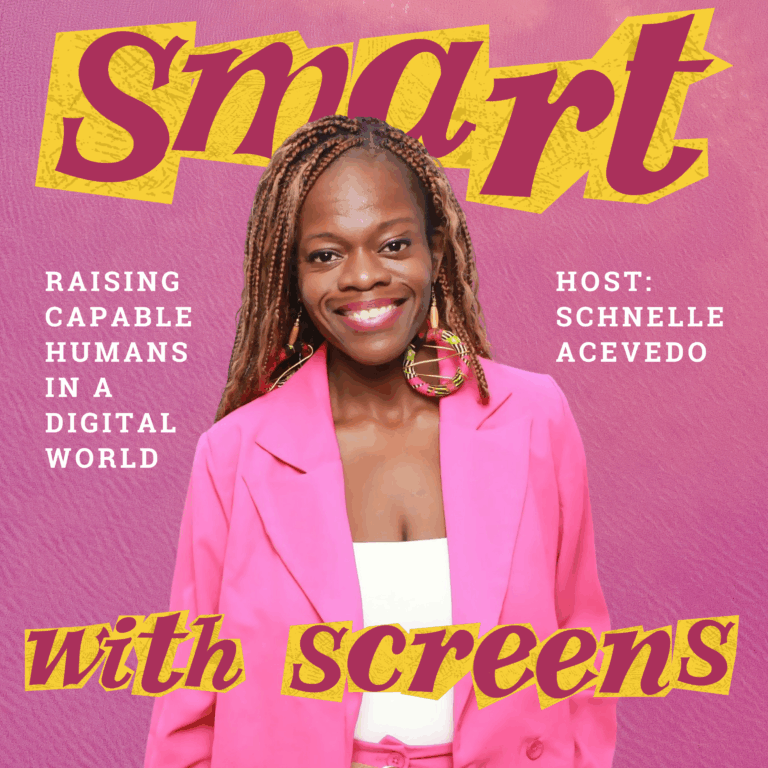
My job was to get you to click, to scroll, to buy. I was really good at it. Now I’m teaching you how it all works.” For 14 years, Schnelle Acevedo created digital marketing campaigns designed to capture and hold your attention. She worked with Disney, Netflix, Amazon, P&G—learning every psychological trick, every algorithmic strategy, every data manipulation tactic that makes social media so hard to put down. Then she had kids. Became a PTA President. Started seeing the disconnect between what schools were teaching about “internet safety” and what kids actually needed to know.
So she made a career shift: from digital marketer to digital literacy educator. In this first episode, Schnelle pulls back the curtain on her transition and explains why she’s the person to teach this. She’s not theorizing about how platforms work—she helped build these campaigns. She’s not guessing about manipulation tactics—she used them for major brands. And she’s not speaking from ivory tower expertise—she’s a Brooklyn mom raising kids in NYC public schools.
This episode sets the stage for a season of honest, insider education about algorithms, AI, deepfakes, scams, and what it really takes to be smart with screens in 2026. No fear-mongering. No jargon. Just real talk from someone who knows.
Episode Timeline
00:00 Introduction to Digital Literacy and Parenting
00:52 The Shift from Marketing to Education
05:10 Understanding Social Media Algorithms and Engagement
Full Podcast Transcript – Episode 1
Schnelle Acevedo (00:00)
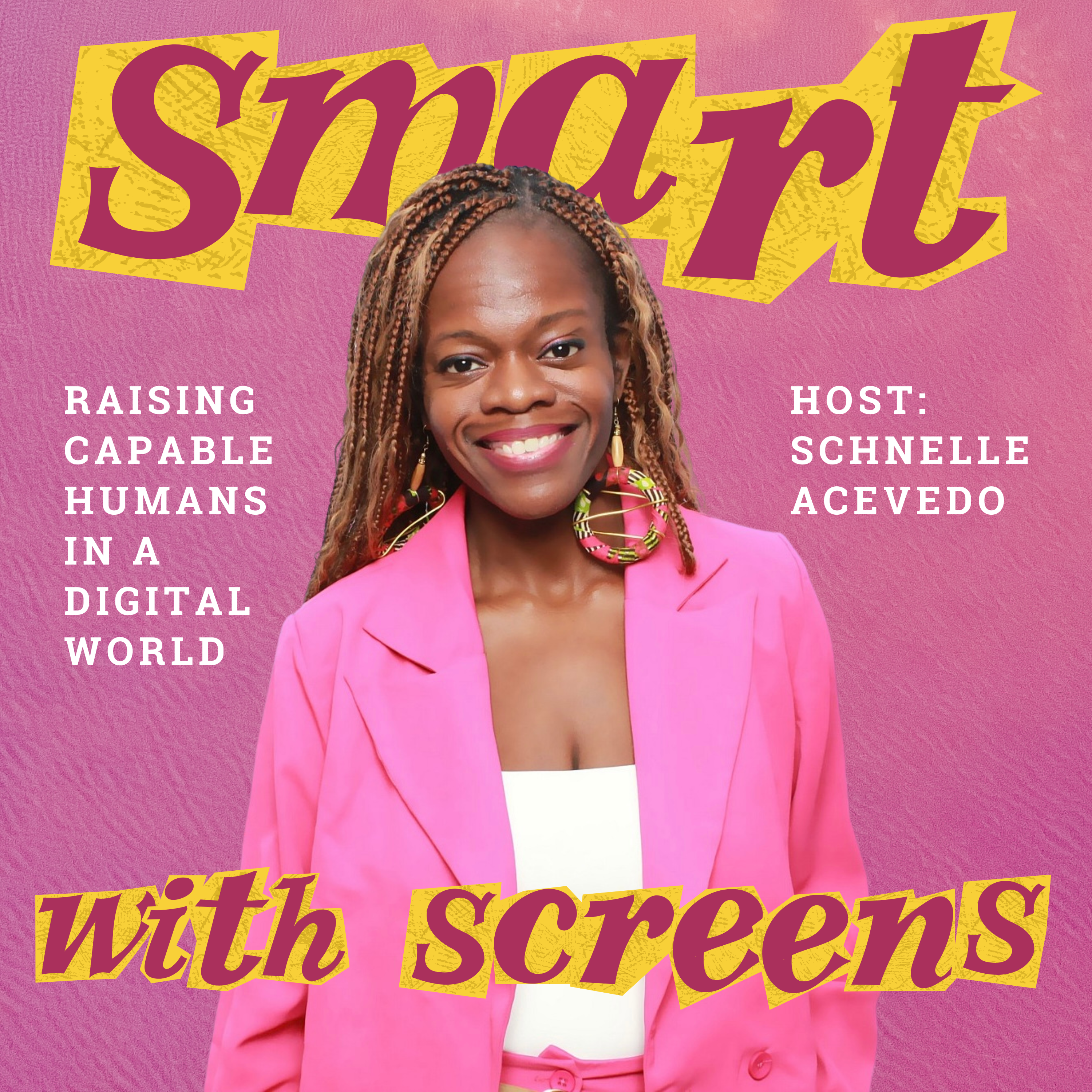
Hi, I’m Schnelle Acevedo and this is Smart with Screens. For 14 years, I created digital marketing campaigns as a mom blogger for some of the biggest brands in the world. I’m talking Disney, Netflix, Amazon, Procter & Gamble, you name it. My job was to get you to click, scroll, to buy, and absolutely engage. And I was really good at it.
Now, I teach families in schools in New York City about how all of that actually works. Because here’s what I realized. We are teaching kids to be safe online without teaching them how online actually works. And that’s a problem. Over the next 10 episodes, I’m going to share with you what I know from the inside, the algorithms, the tricks, the psychology, so that you can make informed decisions about technology for your kids. Not from a place of fear, but from a place of understanding.
So let’s get into it.
Now here’s the moment everything changed for me.
I was sitting at a PTA meeting at my kid’s here in Brooklyn. A well-meeting presenter was talking to parents about digital citizenship. And you know the kind of stuff I’m talking about. Be kind online, don’t share personal information, stranger danger on the internet, all of that good stuff. And I’m sitting here thinking, this is all true, but we’re definitely missing the bigger picture. Nobody wants to talk about why these platforms are so hard to put down.
I don’t even want to talk about it to be honest. Nobody’s explaining that there are literally teams of engineers and psychologists designing features to maximize your screen time. Nobody was teaching parents or kids that when something is free online, you are the product. And I knew all of this because I had been on the other side. I’d helped create campaigns that are designed to do exactly that. So what did I actually do in digital marketing?
And let me be specific about what my work looked like because I think it’s important for you to understand where I’m coming from.
As a mom blogger, when I worked on campaigns for major brands, we weren’t just posting pretty pictures and hoping that people would see them. We were analyzing data constantly. I’m still analyzing data to this day as a blogger. We are checking out what time of day gets the most engagement. What type of content makes people stop scrolling? What emotional triggers lead to clicks and purchases? We A-B tested everything. Should the button be blue or red?
Should we use the word free or limited time? Should we show you that product once or five times before you finally click and buy? We tracked you across platforms. If you looked at something on Instagram, we’d show you ads for it on Facebook. If you clicked but didn’t buy, we’d follow you around the internet until you did. And that is all about what marketing is.
And here’s the thing, none of this was evil or malicious. It was just effective marketing. It was my job and I was good at it. And it’s still my job right now as a full-time blogger. But then I became a parent and I became a PCA president and I started watching my own kids interact with these platforms. And I realized they have no idea how this works. And most adults don’t either.
The shift from marketing to education
The shift from marketing to education. So a few years ago, I started noticing something in my community. Parents were panicking about screen time. Schools were banning phones. Everyone was worried about social media, but no one was actually explaining the mechanics of how these systems work. It was all TikTok is bad or Instagram is dangerous without any explanation of why these platforms are so compelling or how they designed to keep you engaged.
And I thought, I can explain this because I know how the sausage is made. So I started small. I’m doing presentations at the library. And what I do there, I break down how Instagram’s algorithm decides what to show you. I’ll explain while YouTube keeps auto playing the next video, and then I’ll show them the psychological tricks I used in campaigns for myself.
And people were fascinated, not scared, but fascinated. And because you understand how something works, you can make so much better decisions about it. Parents would come up to me after and say things like, had no idea that’s why I can’t stop scrolling. Or now I understand why my kid wants to check TikTok every five minutes. Teachers would say, can you come do this for our whole grade, for our staff? And that’s when I realized, this needs to be a part of my full-time work. So here’s what I’m doing with Smart with Screens. I’m not here to tell you that technology is bad or that you need to throw away your phones. I’m not even here to give you a bunch of rules about screen time, even though we’ll absolutely talk about that. I’m here to teach you about how these systems actually work, using my insider knowledge from 14 years in digital marketing. Over the nine episodes, we’re going to break down how social media algorithms decide what you see, the specific psychological platforms to keep you engaged, the type of people that I’ve been meeting while teaching these classes, the type of questions and feedback that I’ve been getting, how to spot scams and digital manipulation, and so much more. I’m also going to bring in voices, hopefully, from schools and libraries here in New York City who are doing this work on the ground.
Who is this podcast for?
This podcast is for parents who want to understand what their kids are actually doing online, not just monitor it, but get it. It is for educators who are trying to teach digital literacy, but aren’t sure where to start beyond be nice online. It’s for anyone who’s ever felt like they can’t put their phone down and wondered why.
And honestly, it’s for anyone who wants to understand how the digital world actually works from someone who helped build it.
And one more thing before we wrap this episode, I want to be clear about where I’m coming from. I am a Brooklyn native. I went to Canarsie High School. I’m raising my kids in the public school system. I’ve been a PTA president. I’m a current Girl Scout leader, and I’m also a member of the NAACP. I have been a full-time entrepreneur for the past 14 years, and I have learned so much along the way. I’m not a silicon tech person.
I’m looking from the outside. I’m in this community. I understand the reality of what families are dealing with, the resource constraints, the opportunity gaps, the very real need for digital skills to succeed. I understand that as a mom of three, as an entrepreneur, as parents, we are so busy and it’s hard to keep up with everything that’s happening on the internet. But that’s where I come in. Because digital literacy is not about just staying safe online.
It’s about economic opportunity. It’s about equity. It’s about making sure that our kids understand how these tools work so that they can use them effectively and not just get used by them. So that’s why I’m here. And that’s why I am a digital marketer teaching digital literacy. In the next episode, we’re going to talk about how social media algorithms actually work. And I mean, actually the mechanics from someone who’s used them to sell products.
And if you found this helpful, subscribe wherever you’re listening, share it with a parent, a teacher, and anybody else who’s trying to figure this stuff out. Okay, you can find more resources at bamdigitalmedia.info. And you can also email me at contactus@bamdigitalmedia.info. I’m Schnelle Acevedo, and let’s get smart with screens.