Digital Media Program for High School Students
Students develop their voices, create original media, and build practical communication skills through podcasting, newsletters, digital storytelling, and collaborative production.
BAM Digital Media’s high school digital media program gives students the opportunity to become writers, producers, editors, designers, and storytellers — planning content, writing for an audience, conducting interviews, developing scripts, and presenting finished work.
Built for classes, after-school programs, CTE, enrichment, and college or career readiness initiatives.
More Than Content Creation
Students are surrounded by digital content, but few have opportunities to understand how that content is planned and produced. This program moves students from passive consumption into active creation.
Every project begins with an idea and develops through research, writing, collaboration, revision, and production — the same process working media professionals use every day.
- 01 Choosing a meaningful subject
- 02 Identifying a target audience
- 03 Researching and organizing information
- 04 Writing headlines and scripts
- 05 Interviewing peers and community members
- 06 Revising work through editorial feedback
- 07 Producing and presenting a final project
Students Create Before They Click
Digital media education doesn’t require a full class period behind a screen. Students begin with conversation, paper-based brainstorming, handwritten scripts, interview planning, storyboards, headline exercises, and group editorial meetings. Technology is introduced when it supports a specific production goal — recording a podcast, designing a newsletter, editing a video, assembling a portfolio — so literacy, imagination, and critical thinking stay at the center of the program.
| Creative stage | Student work |
|---|---|
| Ideation | Brainstorming, mind maps, audience discussions |
| Writing | Headlines, scripts, interview questions, article drafts |
| Planning | Storyboards, production schedules, role assignments |
| Editing | Peer review, fact-checking, revision |
| Production | Selective use of recording, design, or publishing tools |
What Students Learn
Five flexible modules. Schools can select modules for a shorter program or run the complete sequence.
Digital Storytelling and Audience
Students explore how stories are structured and how purpose changes depending on the intended audience.
Podcasting and Audio Production
Students develop podcast concepts and produce age-appropriate audio segments.
Newsletter and Editorial Production
Students work together as a small editorial team to create a school or community publication.
Video and Visual Storytelling
Students plan short educational, documentary, promotional, or public-service videos.
Portfolio and Career Readiness
Students organize selected work into a final media portfolio and connect their skills to education and career opportunities.
Choose the Right Program Length
Program length, student deliverables, and technology requirements are customized during planning.
Introduction
One focused media project. Best for short enrichment, advisory, or a pilot run.
Program
Two connected production modules. Best for after-school, elective, or extended enrichment.
Media Lab
Full production experience and a finished portfolio. Best for CTE, career readiness, or a semester course.
Intensive
A condensed workshop or production day for events, media days, or school campaigns.
What Students Can Create
The final deliverable depends on program length and your school’s technology policies.
- Student-led podcast episode
- School or community newsletter
- Short documentary
- Public-service announcement
- Interview series
- Digital magazine
- School-event media campaign
- Personal media portfolio
Skills Students Build Through Media Production
Every project requires students to make decisions about accuracy, tone, audience, structure, and presentation. The finished media product matters — but the planning and editorial process is where most of the learning happens.
What the Program Looks Like at Your School
Many activities can be delivered with paper, markers, printed examples, and shared production equipment — no 1:1 device requirement.
- Recommended class size & session length
- In-person and virtual availability
- Device requirements set with your school
- Teacher or staff involvement
- Scheduling options
- Accessibility and differentiation
- Final showcase options
Program Materials and Deliverables
Every school receives a full set of planning and instructional materials.
- Customized program plan
- Student worksheets and project organizers
- Script and interview templates
- Editorial calendars and storyboard templates
- Production checklists
- Rubrics and assessments
- Family communication materials
- Student certificates and a final program summary
Built by a Working Digital Media Professional
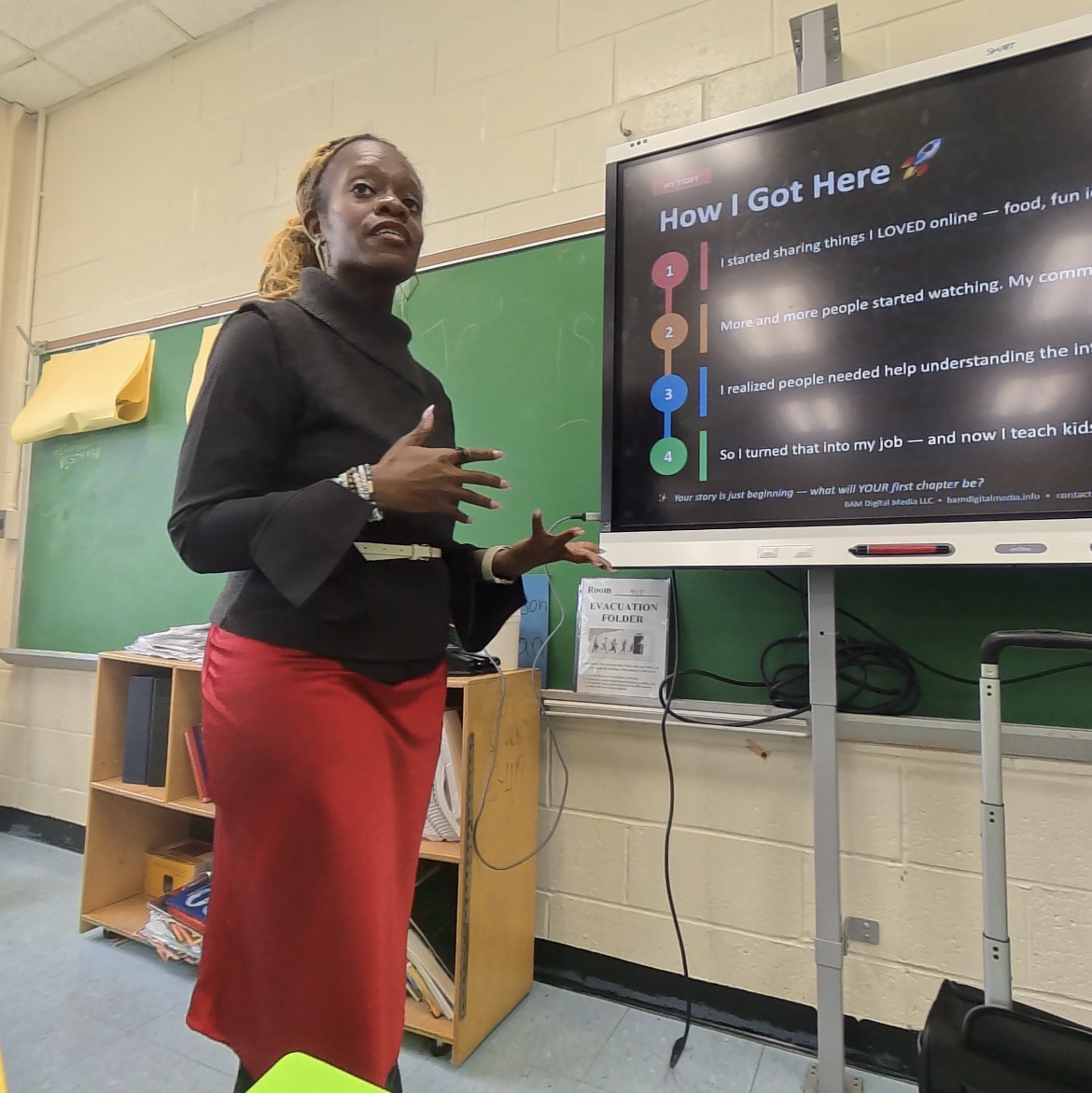
BAM Digital Media programs are founder-led, not run by third-party facilitators. Schnelle Acevedo, MPA, brings 15+ years of hands-on digital publishing experience — writing, producing, and managing content across platforms — directly into the classroom.
NYC and NYS MWBE certified. NYC DOE approved vendor (#SCH050064). Experience delivering programs in schools, libraries, and community organizations, plus national curriculum licensing work.
Digital Media Program FAQs
No. Most planning, writing, and editorial work happens on paper. Devices are introduced only for specific production steps, such as recording or editing, and can be shared rather than 1:1.
Yes. The program is built for beginners. Every module starts with the fundamentals before moving into production.
Yes — as a class, elective, or CTE course. It also runs well as an after-school or enrichment program.
Yes. The 4- and 8-week formats are designed to fit after-school scheduling and staffing.
Yes. Schools can select a single module — podcasting only, or newsletter only, for example — or run the full five-module sequence.
Every student finishes with a tangible piece of media tied to the modules selected, plus a portfolio entry documenting their process and role.
Publishing decisions are made with the school. Work can stay internal to the class or be shared more broadly, depending on your policies and family consent.
We follow your school’s media-release and privacy policies and only publish or feature student work with the appropriate consent in place.
Yes. Writing, research, and presentation components can be mapped to ELA standards, and the full sequence supports CTE and career-readiness goals.
Yes, in person regionally and virtually nationwide, along with licensing options for districts.
Yes. Every program is scoped to your grade levels, schedule, technology policy, and desired outcomes.
Bring a Digital Media Program to Your High School
Give students a structured opportunity to turn their ideas into meaningful media. BAM Digital Media will build a program around your grade levels, schedule, technology policies, and desired student outcomes.